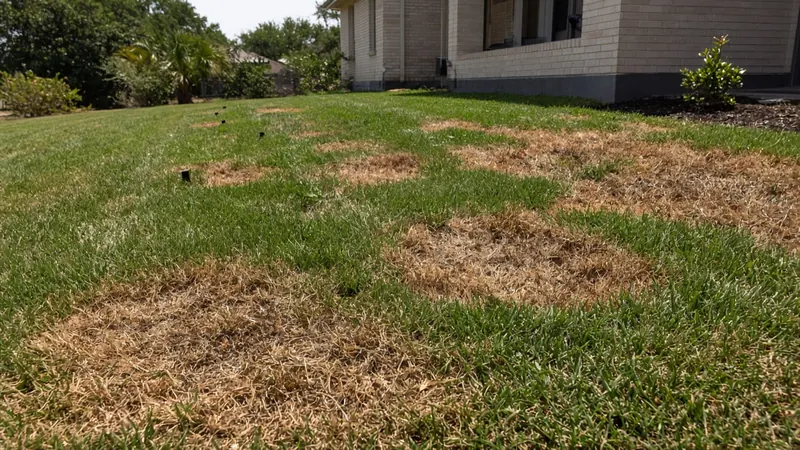
Dig a hole in many yards around New Caney and Porter and you will find sandy or sandy loam topsoil, sometimes with a heavier layer below. Sandy soil behaves very differently from the clay that covers much of north Texas, and the sprinkler schedule should reflect that.
How sand handles water
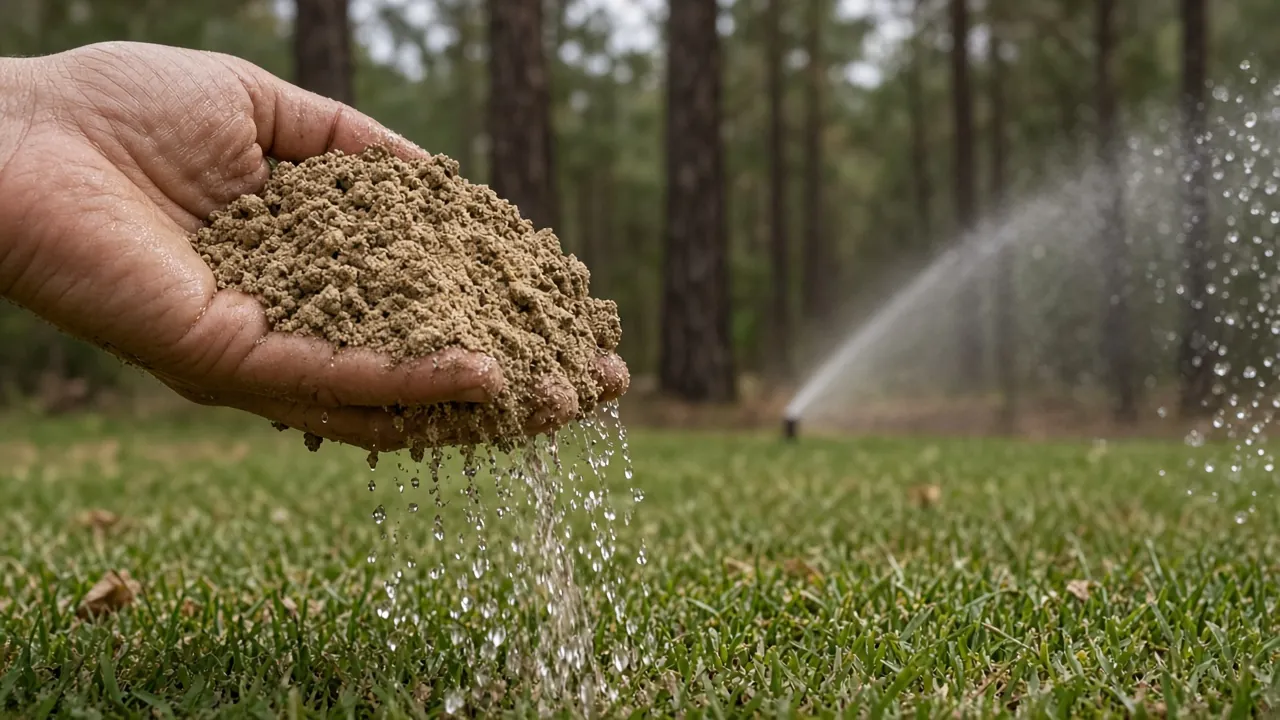
Sand particles are large, with big spaces between them. Water moves into sandy soil fast, so runoff is less of a problem than on clay. But sand holds much less water. Once the root zone is full, extra water drains down past the roots and is wasted. And it dries out faster between waterings.
Where sand sits over a denser layer, water can perch on that layer and move sideways, so a low area can stay wet while the high spots dry.
What that means for watering
Do not overdo single runs. Running a zone for a very long time on sand pushes water below the roots. A moderate run that wets the root zone and stops is better.
But do not go too short. Very short, frequent waterings keep only the top inch damp. Roots stay shallow and the lawn suffers when it gets hot.
Water often enough to keep up. Sandy lawns may need water a little more often than clay lawns in hot weather, within whatever days your provider allows.
Organic matter helps. Topdressing with compost over time improves how much water sandy soil holds.
Finding the right amount
- Measure what each zone puts down. Set out several straight-sided cans across a zone and run it for 15 minutes. Measure the depth.
- Check how deep the water goes. A few hours after watering, push a long screwdriver into the soil or dig a small hole. You want the soil moist to about the depth of the roots, often 4 to 6 inches for turf.
- Adjust. If water goes much deeper than the roots, shorten the run. If it only wets the top inch or two, lengthen it.
- Watch the lawn. Grass that turns bluish-gray, shows footprints that stay, or curls its blades needs water.
Summer, spring and fall
Southeast Texas summers are hot and humid, with periods of heavy rain and periods of none. A rain sensor saves you from watering a lawn that just got two inches. In dry spells, lawns on sand can stress quickly. Spring and fall need much less, and many winter weeks need none.
Coverage matters more on sand
Because sand does not spread water sideways much, a gap in coverage shows up as a dry spot quickly. Heads must reach each other, nozzles must match, and heads must clear the grass. See why heads break.
Beds on sand
Spray heads in sandy beds can wash mulch and soil around. Drip is gentler and puts water where roots are. See drip for beds.
Call us
If you are not sure your schedule fits your soil, call (346) 627-2444. We can measure your zones and set the controller.
Have a question this did not answer? Call (346) 627-2444 and ask. More articles on the blog.