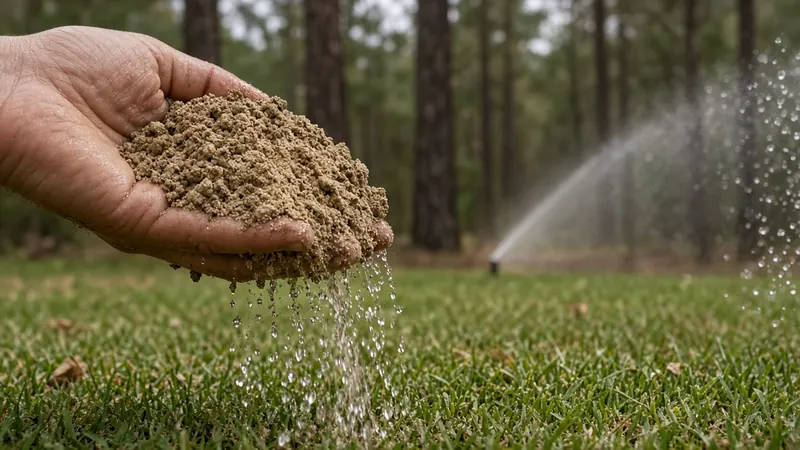
Beds along the house, around trees and along fences are often watered with the same spray heads used on the lawn. As shrubs grow, they block the spray. Water hits leaves, walls and windows instead of the soil. Drip irrigation solves that.
How drip works
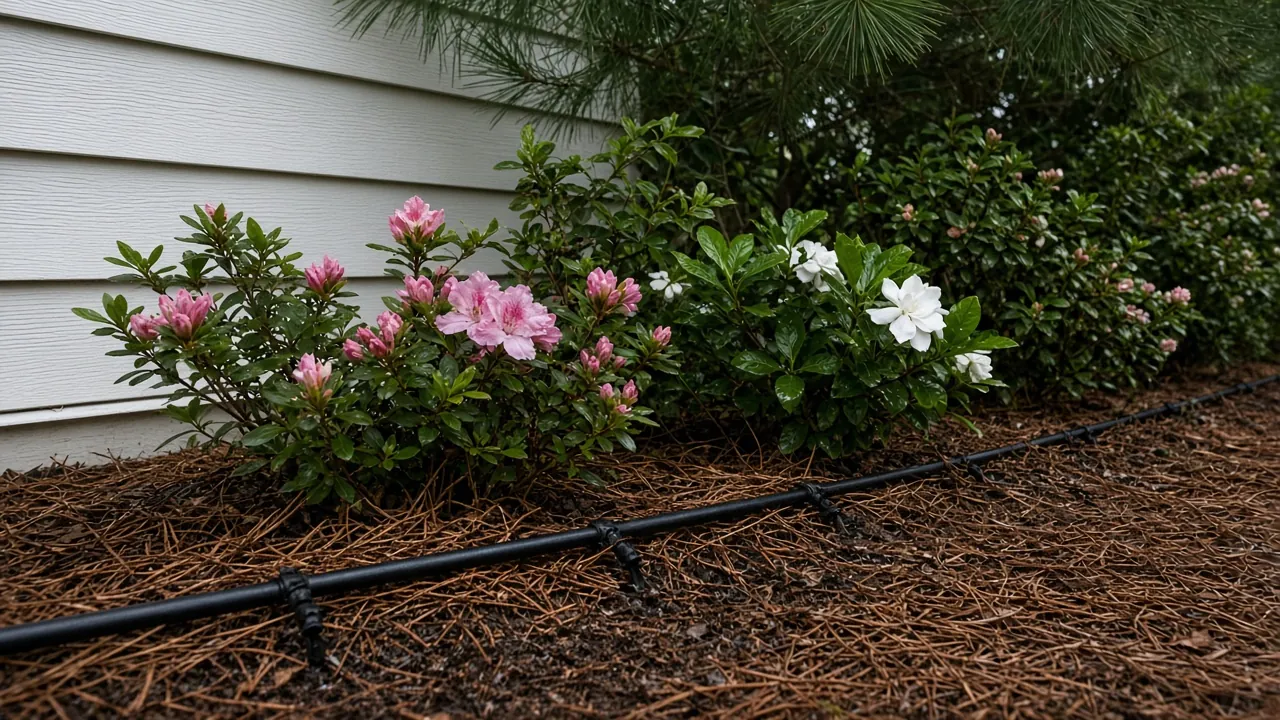
Drip uses low-pressure tubing laid on the soil, under mulch, with emitters that release a measured amount of water at each plant. Some tubing has emitters built in at regular spacing. Water goes into the soil directly with almost no loss to wind or evaporation.
Why it suits this area
- Humid weather. Keeping water off leaves helps reduce leaf diseases.
- Sandy beds. Drip soaks in gently without washing mulch and soil around.
- Shade beds under trees. Drip waters the plants without soaking surrounding shade turf.
- No overspray onto walls, walks and driveways.
Converting a spray zone
- Cap the spray heads in the bed.
- Connect the drip supply at one riser or at the valve.
- Add a filter to keep sediment out of emitters.
- Add a pressure regulator, because drip needs much lower pressure than spray.
- Lay the tubing along the plants and stake it down.
- Add emitters, more for larger plants.
- Install a flush cap at the end of each line.
- Set the run time. Drip runs much longer than spray.
Drip and spray should never be on the same zone.
Common problems
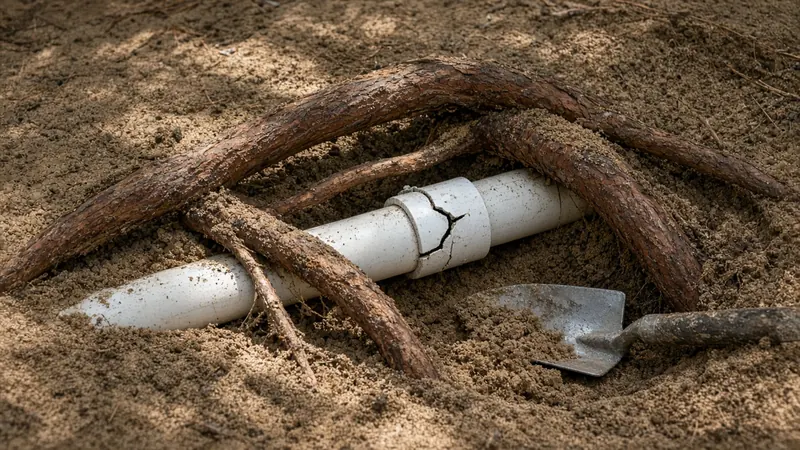
- Tubing cut by shovels and edgers
- Emitters clogged with sediment or mineral scale
- No filter or regulator, causing blowouts and clogs
- Emitters left at the stem as plants grew
- Tubing exposed to sun instead of under mulch
Maintenance
- Flush the lines once or twice a year
- Clean the filter screen
- Walk the bed while it runs and look for dry plants or geysers
- Move emitters outward as plants grow
How long to run drip
Drip is measured in gallons per hour, not inches. A plant with two 1-gallon-per-hour emitters gets two gallons in an hour. New shrubs need water more often while they establish; established shrubs and perennials can go longer between waterings, with deeper soaks. In sandy beds, water spreads down more than sideways, so emitters need to be close to the root ball, and larger plants need several emitters around them rather than one at the stem.
A simple check: an hour after the drip zone finishes, dig a small hole a few inches from a plant. The soil should be moist through the root zone. If it is dry a few inches down, run longer. If it is soggy, run shorter or less often.
Foundation beds
Beds along the foundation often sit under the roof drip line, where rain runoff and gutters add water unevenly. Drip lets you water those beds evenly without spraying the siding or brick. Keep emitters a little away from the slab, and make sure the soil slopes away from the house so water does not collect against it.
Call us
If you want beds converted to drip, or your drip is leaking or clogged, call (346) 627-2444.
Have a question this did not answer? Call (346) 627-2444 and ask. More articles on the blog.