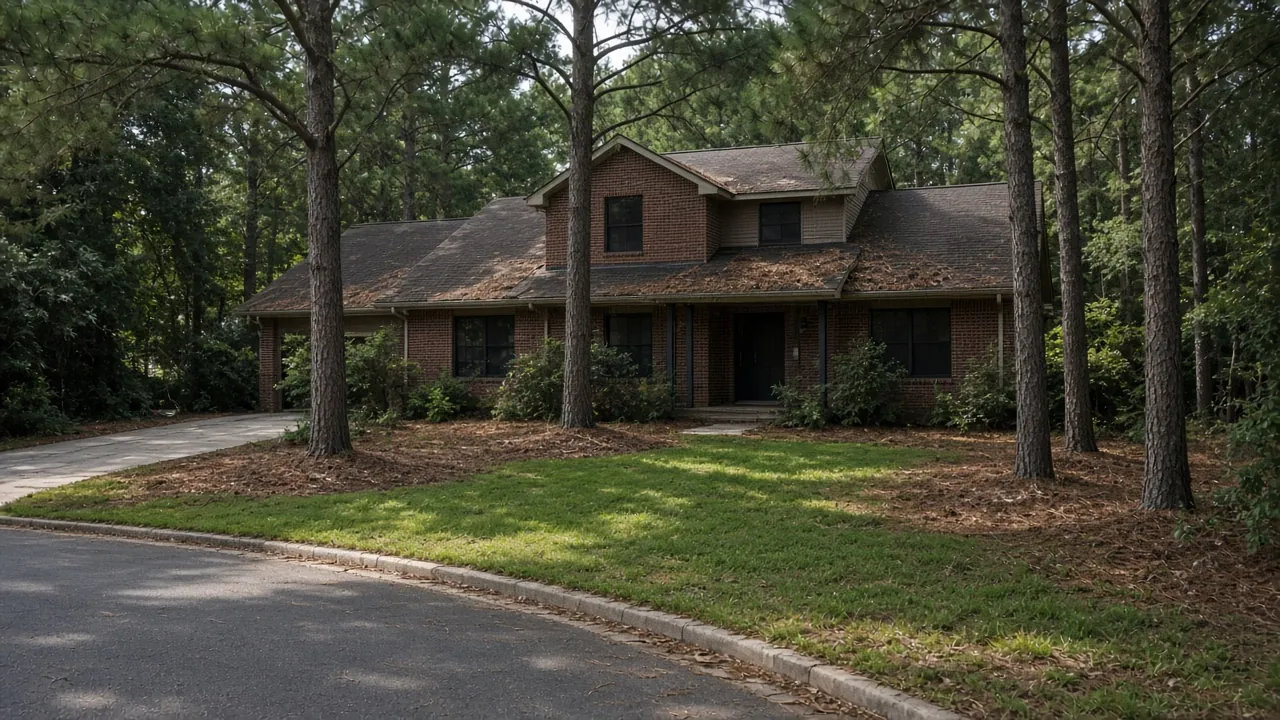
Many lots in Kingwood, Porter, Roman Forest and New Caney sit under tall pines and hardwoods. Trees bring shade, needles, leaves and roots, and each of those affects how a sprinkler system works and wears.
Roots and pipe
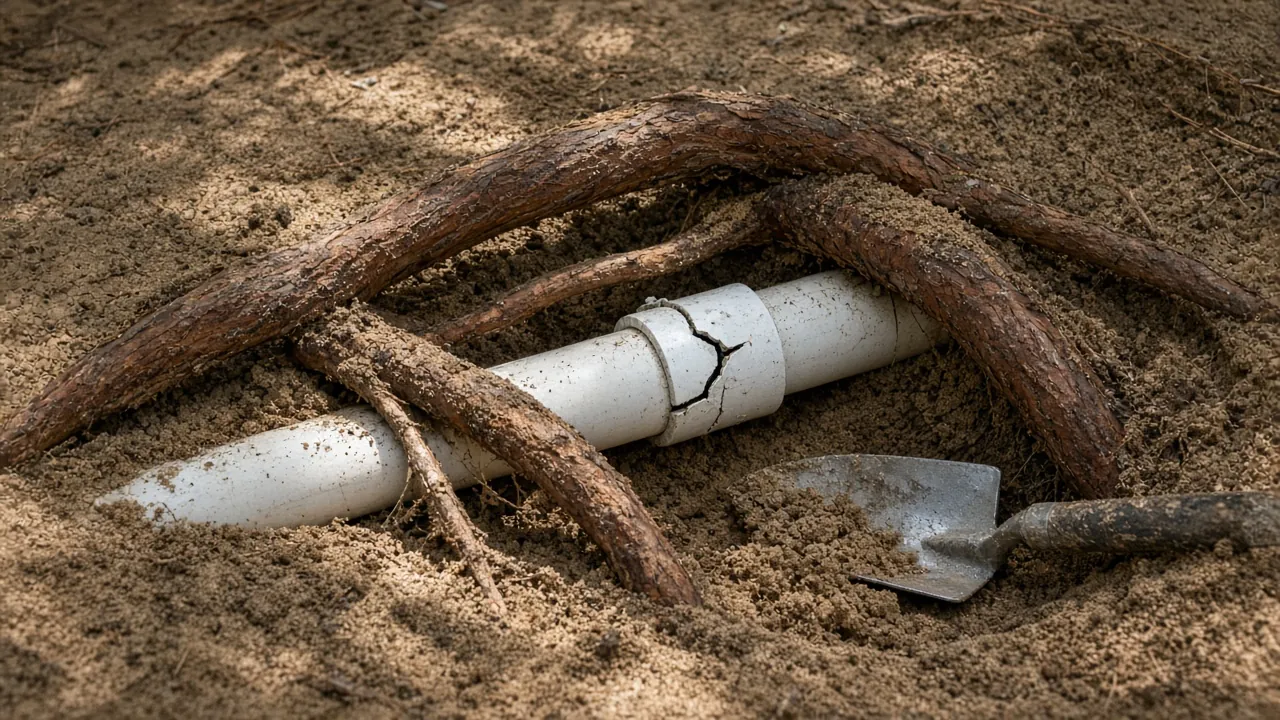
Roots grow where water and oxygen are, and the soil around a sprinkler lateral has both. Roots grow along and around the pipe. As they thicken, they lift it, bend it and put stress on fittings. Combined with soil movement after heavy rain, that cracks joints and lifts heads out of level.
Signs of root damage:
- A wet spot near a tree that appears when one zone runs
- Heads near a tree tilted or raised
- Weak pressure on heads past a certain point on a zone
- A valve box lifted or cracked
Repairing near roots
We dig by hand near trees and avoid cutting large roots, which can harm or destabilize a tree. If a line keeps breaking in the same place, rerouting it farther from the trunk usually beats repairing it again. For major roots or valuable trees, check with a certified arborist before any significant digging.
Shade changes water needs
Lawns in shade use much less water than lawns in sun. When a shady area shares a zone with a sunny area, the shade gets overwatered. Overwatered shade turf thins out, stays soft and is prone to fungus.
Fixes include splitting sun and shade onto separate zones, using lower-flow nozzles on shaded heads, and converting deep-shade areas to beds with drip. If grass keeps failing in deep shade, more water will not help. It needs more light, or a different groundcover.
Needles and debris
Pine needles, leaves and sand get into spray heads and screens. Clogged nozzles spray weakly or unevenly. Each spray head has a small screen under the nozzle. Pulling the nozzle and rinsing the screen fixes many weak heads. Heads also get buried under needle mats; keep them clear.
Storms and falling limbs
Tall trees drop limbs in storms. Limbs land on heads and break them, and equipment used to clear fallen trees drives over lines. After a storm, run each zone and look for damage. See checking your sprinklers after a storm.
Trees need water too
In a long dry spell, mature trees benefit from a slow, deep soak out at the edge of the canopy. Lawn sprinklers only wet the top few inches. A soaker hose or drip ring helps during drought, within your provider’s rules.
Call us
If your wooded yard has leaks, clogged heads or thin shade lawns, call (346) 627-2444.
Have a question this did not answer? Call (346) 627-2444 and ask. More articles on the blog.