Every sprinkler system connected to a drinking water supply needs a backflow preventer. Most homeowners do not notice theirs until it starts leaking, or a notice arrives from the water provider.
What backflow is
Water in sprinkler pipes sits still between waterings and can pick up soil, fertilizer and bacteria. If pressure in the water supply drops, for example during a main break or heavy firefighting use, that water can be pulled backward into the home’s supply. A backflow preventer uses check valves, and on some types an air inlet, to stop that.
Texas irrigation rules require backflow prevention on irrigation systems connected to a potable water supply, and an isolation valve between the meter and the backflow device on new systems.
Common types
- Pressure vacuum breaker (PVB). Above ground, at least a foot above the highest head. Very common on homes.
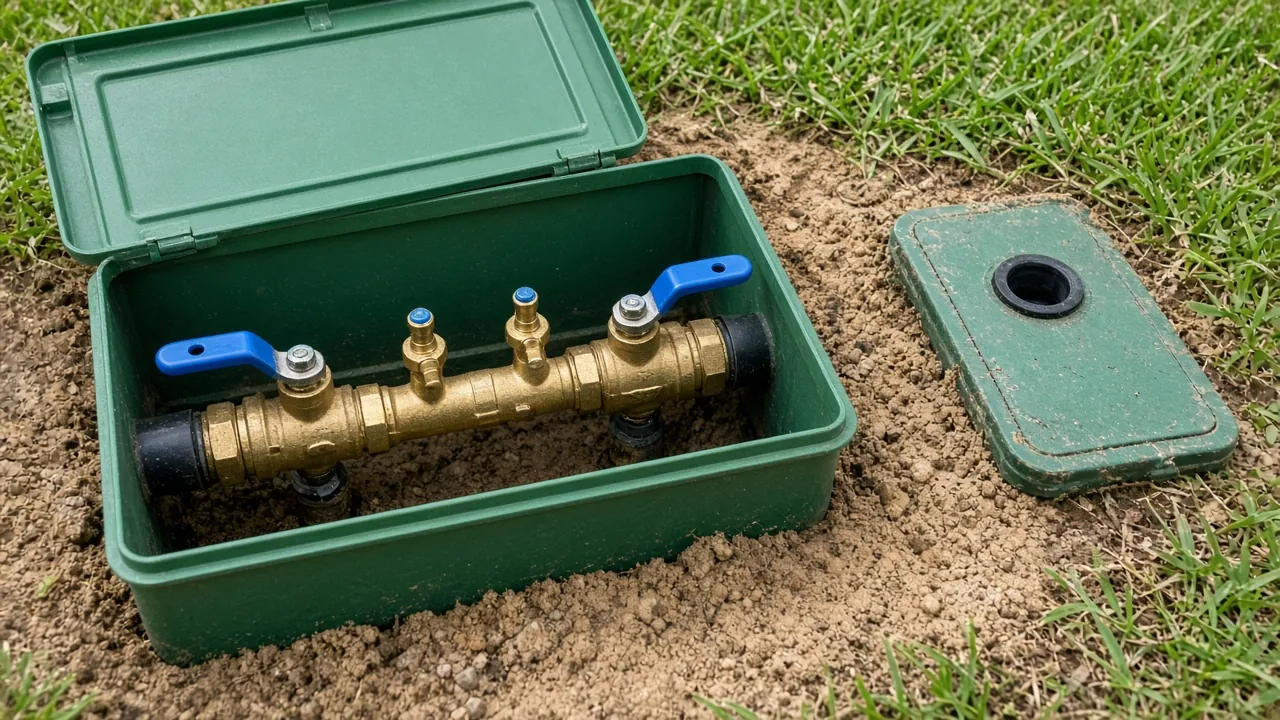
- Double check valve assembly. Two check valves, often below ground in a box.
- Reduced pressure zone assembly (RPZ). Used where the hazard is higher.
Which type is required depends on the provider and the system.
Why they leak
- Spraying from the top when the system starts can mean the air inlet is not seating, often because of debris or a worn seal.
- Dripping test cocks that were left open or have worn seals.
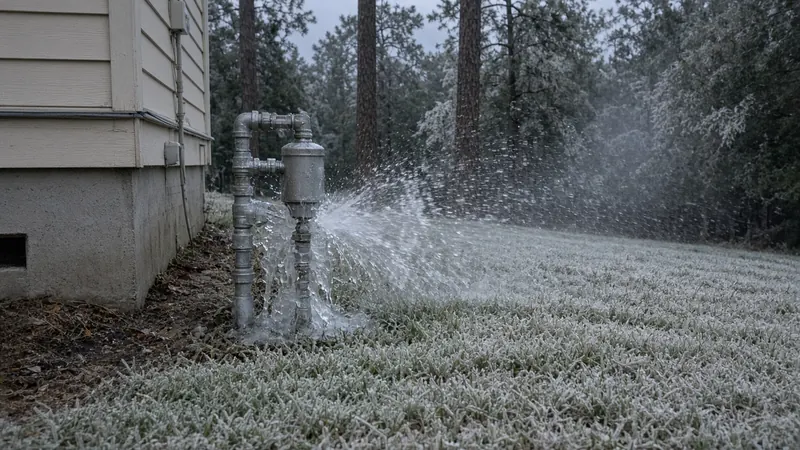
- Cracks after a freeze. The device holds water, and when it freezes, the body can crack. See freeze prep.
- Worn internal parts that can often be replaced with a repair kit.
Testing
Backflow assemblies are tested by a licensed backflow prevention assembly tester using a gauge kit. Whether and how often your device must be tested depends on your water provider. Many providers require testing at installation and after repairs. If you receive a notice, it will have a deadline.
Never remove it
Removing a leaking backflow device and connecting the pipe straight through is a health risk and against code. If it leaks, close the irrigation shut-off and have it repaired or replaced. The rest of the house still has water.
Zones run but no water comes out?
Check the ball valves on the backflow device. They may have been closed for winter or after a repair. Handles in line with the pipe are open.
Call us
If your backflow device is leaking, cracked, or due for testing, call (346) 627-2444.
Sources
Have a question this did not answer? Call (346) 627-2444 and ask. More articles on the blog.